
Report by Swati
27 Aug 2026
Kathmandu
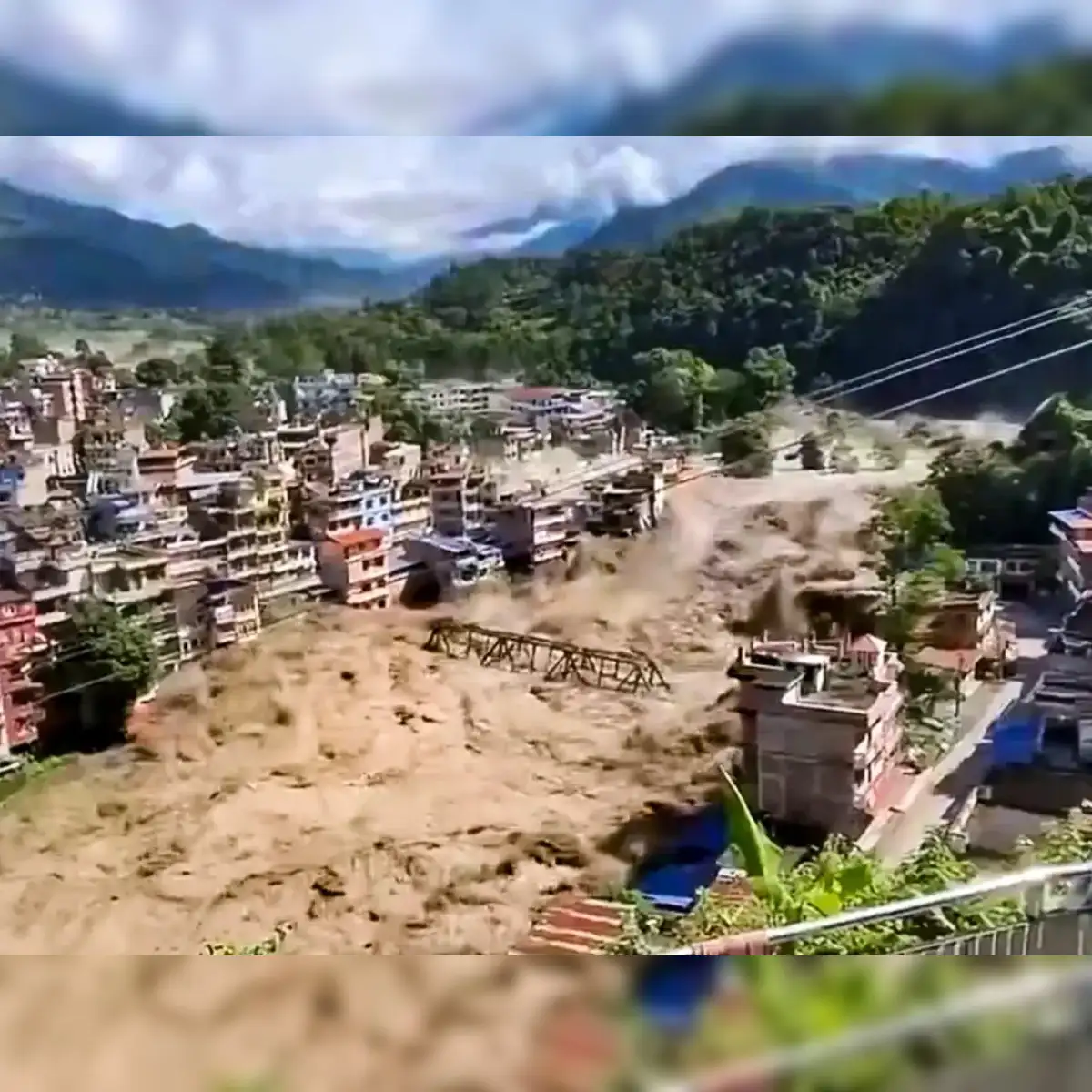
The devastating flash floods that struck Nepal’s Himalayan region have once again exposed the fragile link between rapid development, climate change and the mountains’ natural limits. The latest disaster along the Nepal–Tibet border has caused extensive loss of life and damaged villages, roads, bridges and other critical infrastructure. The disaster is not simply a story of unusually heavy rainfall. It is also a warning about how infrastructure and human settlements are being developed in an increasingly unstable Himalayan environment.
A Disaster Bigger Than a Flood
The latest flash flood was linked to a major glacial collapse that sent huge volumes of ice, rock, mud and water through river valleys. The resulting surge overwhelmed communities and infrastructure in northern Nepal and neighbouring Tibet. Reports indicate that hundreds of people remain missing, while rescue teams continue to face difficult terrain, damaged roads and disrupted communication and power networks.For a mountainous country such as Nepal, roads, bridges and hydropower projects are lifelines. But when these structures are built without fully accounting for changing climatic and geological risks, they can become highly vulnerable during extreme events.
The Himalayas Are Sending Repeated Warnings
This is not Nepal’s first devastating flood. The Himalayan region has witnessed a series of floods, landslides, glacial disasters and infrastructure failures in recent years. Reuters has noted a broader pattern of deadly Himalayan disasters increasingly associated with climate change and extensive development. The warning was also visible before the current disaster. The International Centre for Integrated Mountain Development (ICIMOD) had cautioned in July 2026 that even a below-normal monsoon does not necessarily mean a lower flood risk. Long dry periods can be followed by sudden, intense rainfall capable of triggering flash floods, landslides and glacier-related hazards. (ICIMOD)
Development Must Respect Mountain Ecology
The central question is no longer whether Nepal needs development. It clearly does.The question is what kind of development is suitable for the Himalayas?Road expansion, hydropower generation, tourism infrastructure and cross-border trade are important for Nepal’s economy. But projects in fragile mountain valleys require stronger environmental assessments, safer construction standards and continuous monitoring of rivers, glaciers and slopes.A road that cuts through a vulnerable slope or a bridge built too close to an unpredictable river may provide connectivity during normal conditions but become a serious risk during an extreme event.Recent research on the 2024 failure of Nepal’s BP Highway similarly highlighted the need for climate-resilient infrastructure planning and better institutional preparedness for extreme hydrological events. Early Warning Systems Need to Become a Priority
One of the most important lessons from the latest disaster is the need for faster and more reliable early-warning systems.Monitoring glaciers, glacial lakes, river levels, rainfall and unstable slopes can provide communities with crucial minutes or hours to evacuate.But technology alone is not enough. Warnings must reach people in remote mountain settlements, transport corridors, tourist areas and construction sites in languages and formats they can immediately understand.Nepal’s Lesson Is Also India’s LessonThe Himalayan ecosystem does not stop at national borders.Rivers originating in the Himalayas flow through Nepal and into India. A disaster in the upper mountain region can therefore have consequences downstream, including in northern Indian states.The latest events should encourage greater cooperation among Nepal, India, China and other Himalayan countries on glacier monitoring, flood forecasting, disaster response and climate adaptation.For India’s Himalayan states, including Uttarakhand, Himachal Pradesh, Sikkim and Arunachal Pradesh, the message is equally important: mountain development cannot follow the same model used in plains and cities.
Listen Before the Next Disaster
The Himalayas are not an obstacle to development, but they are not an unlimited construction zone either.Every disaster should be treated as a lesson rather than simply an emergency to be managed and forgotten. Stronger building standards, scientific land-use planning, protection of natural drainage channels, glacier monitoring, resilient roads and bridges, and community-based disaster preparedness must become part of Himalayan development policy.The latest Nepal flood is therefore more than another natural disaster. It is a reminder that the mountains are changing—and that development must change with them.The Himalayas are giving us signals. The real question is whether policymakers will listen before the next warning becomes another tragedy.