
Report by Swati
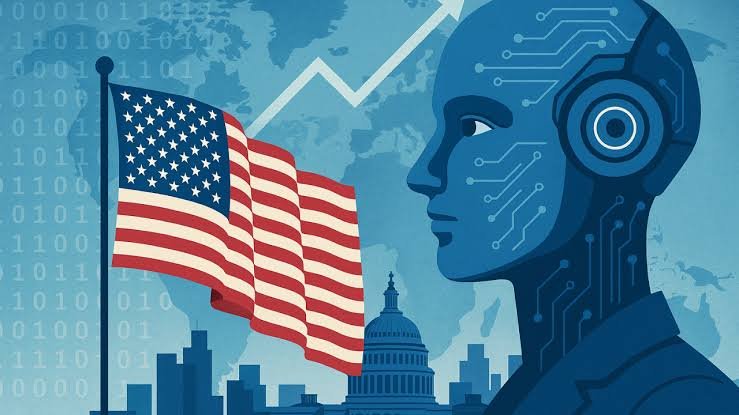
WASHINGTON: Artificial intelligence has rapidly evolved from an emerging technology into a strategic force capable of reshaping economies, industries, national security and everyday life. At the centre of this transformation, the United States remains one of the world’s most influential AI ecosystems, driven by technology companies, research institutions, entrepreneurs and massive investment in computing infrastructure.The American AI race is no longer limited to developing smarter software. It increasingly involves advanced computing, semiconductor technology, cloud infrastructure, data centres, robotics and the development of increasingly capable AI models. From Silicon Valley to a Global AI Ecosystem .The United States has built a powerful technology ecosystem connecting universities, start-ups, major technology companies and investors. This combination has helped accelerate research and commercial deployment of artificial intelligence across sectors ranging from healthcare and finance to manufacturing, education and defence.American technology companies are also competing to develop increasingly sophisticated AI systems while expanding the infrastructure required to operate them at global scale.
The Infrastructure Behind the AI Revolution Behind every advanced AI system lies an enormous technological infrastructure.High-performance processors, specialised AI chips, cloud-computing platforms and data centres have become critical components of the emerging AI economy. As demand for computing power rises, the United States faces the challenge of expanding infrastructure while managing electricity consumption, water requirements, supply chains and environmental pressures.This means the AI race is simultaneously becoming an energy, semiconductor and infrastructure race.
A Strategic Competition -Artificial intelligence has also acquired a geopolitical dimension. Governments increasingly view advanced AI capabilities as important to economic competitiveness, technological sovereignty and national security.Washington’s policies increasingly focus on maintaining American leadership in advanced computing and AI while addressing technology-security concerns and supply-chain vulnerabilities.The competition is therefore not simply about which company creates the best AI model. It is also about which countries can build the strongest ecosystem around the technology. Opportunities and Risks -AI could significantly improve productivity, scientific research, medical discovery and public services. At the same time, rapid adoption raises difficult questions about employment, misinformation, privacy, cybersecurity, intellectual property and responsible use.The challenge for policymakers is to encourage innovation without allowing technological development to outpace safeguards.The Global Impact -What happens in America’s AI sector will extend far beyond US borders. American AI technologies, investment flows and infrastructure decisions can influence businesses and governments worldwide.Countries including India are also expanding their own AI capabilities, creating opportunities for cooperation as well as competition in areas such as research, digital infrastructure, skilled talent and innovation.The Road Ahead -The next phase of the AI revolution will likely be determined not only by technological breakthroughs but by the ability to build reliable infrastructure, develop skilled workforces and establish effective governance.For the United States, maintaining leadership in artificial intelligence will require continued investment in research, computing capacity, semiconductor supply chains and human talent.The AI race has already begun. The larger question is who will define the technological rules of the next decade—and how responsibly that power will be used.