Report by Swati
August 15, 2026
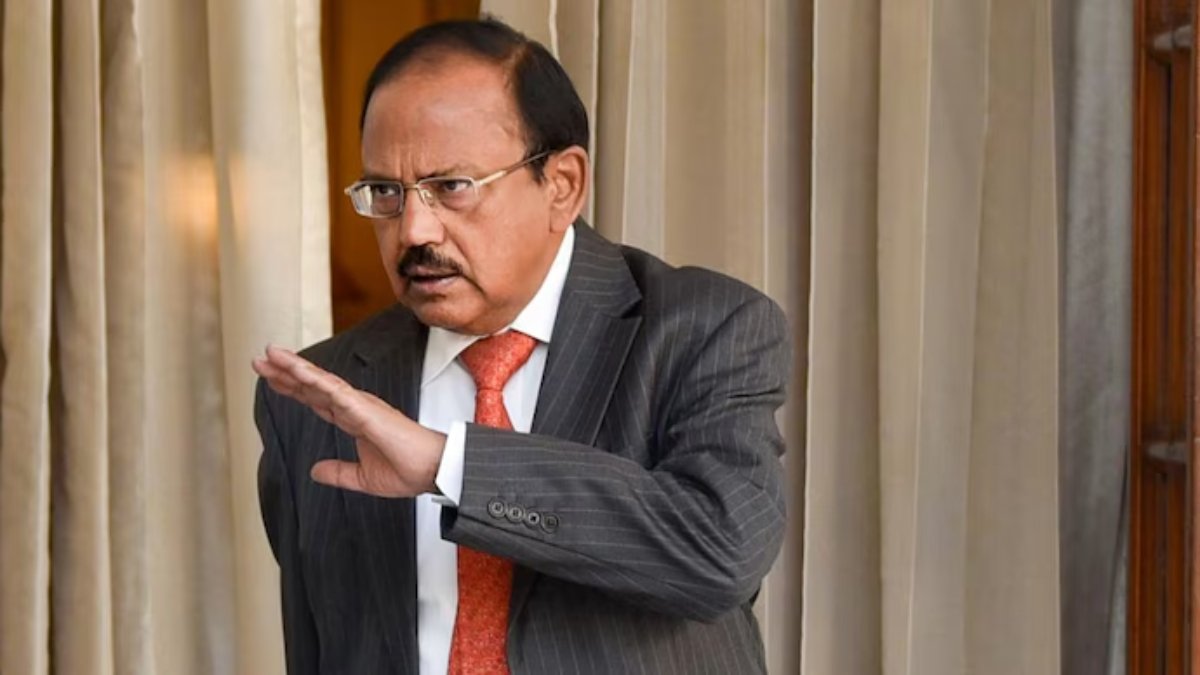
NEW DELHI: National Security Adviser Ajit Doval has offered a rare account of the strategic thinking behind Operation Sindoor, as a new two-part documentary, Declassified: Operation Sindoor, brings previously unseen perspectives on the military operation launched in response to the April 22, 2025 Pahalgam terror attack.The documentary premieres on Discovery and discovery+ on August 15, 2026, and traces the strategic deliberations, military planning and execution of the 88-hour confrontation. It features perspectives from India’s military leadership, personnel involved in the operation, defence experts and journalist .Doval’s First Major Post-Sindoor Account .In his account, Doval described the central question posed by Prime Minister Narendra Modi after the Pahalgam attack: who was responsible for the assault and who were the masterminds behind it? .The attack on April 22, 2025, in Pahalgam claimed 26 lives, triggering a major strategic and security response from New Delhi.India subsequently launched Operation Sindoor on May 7, 2025, targeting nine terrorist sites in Pakistan and Pakistan-occupied Kashmir. Doval has previously stated that the targets were selected with precision and that the strike phase took only 23 minutes.
India Can Hit Hard’ — Doval’s Strategic Warning
Doval’s message is unmistakably firm: India’s restraint, tolerance and generosity should not be interpreted as weakness.In his first post-Sindoor interview, he emphasised that India is prepared to take risks and deliver a forceful response when national security demands it, irrespective of the consequences.
The statement is being viewed as a broader deterrence message to adversaries, particularly Pakistan, that India’s security doctrine has acquired a more assertive operational dimension.
Precision Strikes and Indigenous Technology
Doval has also highlighted the role of indigenous defence technology in Operation Sindoor. According to his earlier account at IIT Madras, India selected nine terrorist targets located across Pakistan and ensured that the strikes remained tightly focused on the intended objectives.He specifically pointed to systems such as BrahMos missiles, integrated air-control and command systems and indigenous radars, describing the operation as a demonstration of India’s growing technological and defence capabilities. Doval also challenged international media narratives regarding damage inside India, asking for photographic evidence of significant Indian infrastructure damage during the operation.
Pakistan Under Strategic Pressure
The revelations have renewed discussion in Pakistan over the scale and consequences of Operation Sindoor. Pakistani political commentator and former Punjab caretaker chief minister Najam Sethi, who is regarded as being close to former Prime Minister Nawaz Sharif, later acknowledged that Indian missile technology and precision had enabled strikes against Pakistani air bases and militant infrastructure.
Sethi’s remarks represented a significant departure from Pakistan’s efforts to minimise the impact of the Indian strikes.However, claims circulating about Sethi predicting a specific imminent “surprise attack” should be treated cautiously unless independently verified. His documented comments do establish that he has discussed the possibility of further Indian military action in other regional contexts, but that is different from confirming a specific future Operation Sindoor attack.
The Trailer Has Been Shown’
India’s military leadership has also repeatedly maintained that the country remains prepared for any future escalation.
Army Chief General Upendra Dwivedi had described the 88-hour Operation Sindoor as only a “trailer” and said the armed forces were prepared for any future eventuality. His remarks underlined the military’s continuing emphasis on preparedness and deterrence.
The message emerging from the latest disclosures is therefore broader than the history of one operation: India wants its adversaries to understand that future responses will be determined by circumstances, national security requirements and operational preparedness.
A New Chapter in India’s Counter-Terror Doctrine
Operation Sindoor marked a significant chapter in India’s response to cross-border terrorism. The declassified accounts now offer a closer look at how intelligence, political decision-making, military planning and indigenous technology were brought together during one of the most consequential India-Pakistan confrontations in recent years.
For Pakistan, the disclosures serve as a reminder of India’s evolving precision-strike capabilities. For India, they reinforce a strategic narrative centred on deterrence, technological superiority and the ability to respond decisively to terrorism.The documentary’s release on Independence Day places that message in a wider national-security context: India’s restraint is a strategic choice—not an indication of weakness.