
Report by SWATI
New Delhi 8 August
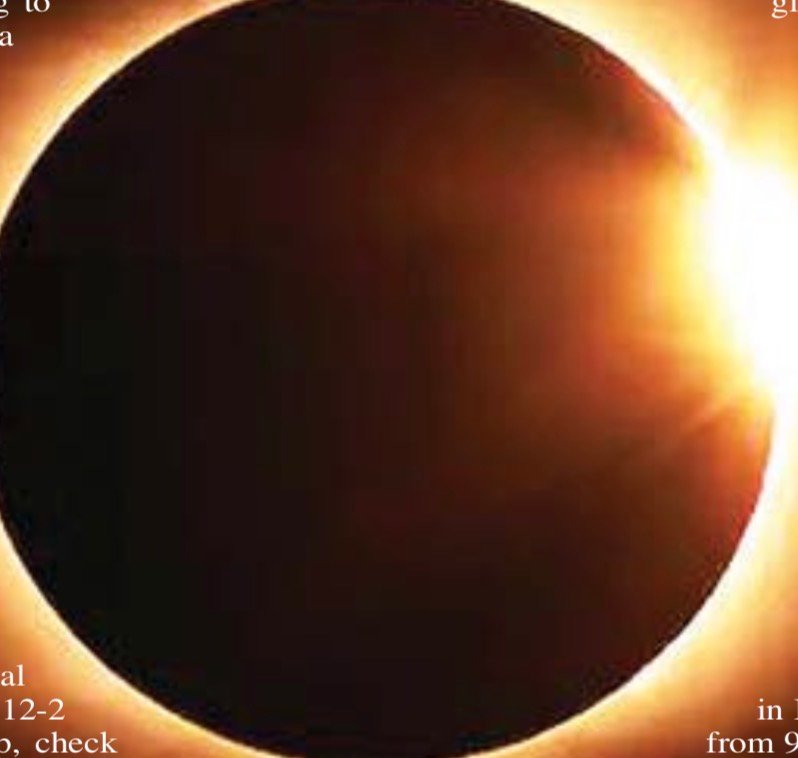
Skywatchers around the world are gearing up for a spectacular total solar eclipse on August 12, 2026, an astronomical event that will be visible in totality across parts of Greenland, Iceland, northern Russia, the Atlantic Ocean, Spain and a small part of Portugal. Several regions across the Northern Hemisphere will also witness a partial solar eclipse. A total solar eclipse occurs when the Moon moves directly between the Earth and the Sun and completely blocks the Sun’s bright disk. During totality, the daytime sky can become noticeably darker and the Sun’s corona may become visible.NASA Warns Against Looking Directly at the Sun NASA has issued important safety advice for people planning to observe the eclipse. According to the agency, regular sunglasses are not safe for viewing the Sun, regardless of how dark they are. For the partial phases of the eclipse, viewers should use specially designed solar eclipse glasses or handheld solar viewers that meet the ISO 12312-2 international safety standard. Damaged, scratched or torn viewing glasses should not be used. NASA also strongly warns against looking at the Sun through a camera lens, binoculars or a telescope while wearing ordinary eclipse glasses. Concentrated sunlight can pass through the optical equipment and cause serious eye injury. Special-purpose solar filters must be securely attached to the front of such equipment.
When Is It Safe to Remove Eclipse Glasses?
During a total solar eclipse, viewers can look directly at the Sun only during the brief period of totality, when the Moon completely covers the Sun’s bright face. Eye protection must be put back on before totality ends, as soon as any part of the bright Sun becomes visible again.
Those without certified eclipse glasses can use an indirect viewing method, such as a pinhole projector, which projects an image of the eclipsed Sun onto a surface. NASA advises viewers to look at the projected image rather than directly at the Sun.
Will the Total Solar Eclipse Be Visible in India?
No. The total solar eclipse of August 12, 2026, will not be visible from India. NASA’s listed visibility regions for the eclipse include Greenland, Iceland, northern Russia, Spain, a small part of Portugal and parts of Europe, Africa and North America for the partial phases. India is not included in the visibility region.
The eclipse is expected to be one of the major astronomical events of 2026, drawing the attention of professional astronomers, researchers and skywatchers across the world.