
Report by Swati
Uttrakhand , September 20, 2026
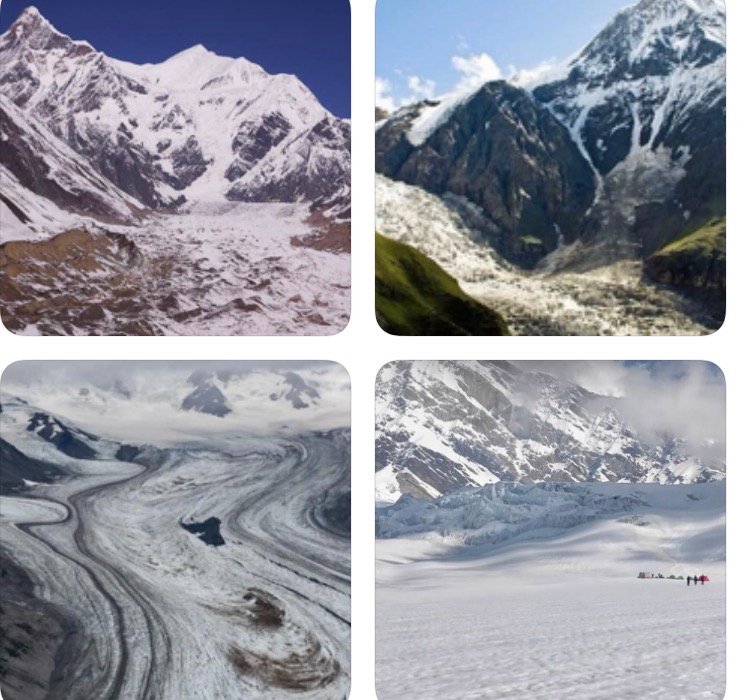
Uttarakhand’s Himalayan ecosystem is facing growing concerns as a recent scientific study has documented significant retreat of 23 major glaciers across the state, with some glaciers losing ice at rates of more than 80 metres annually.
The study, published in Discover Geoscience, was conducted by scientists associated with the Wadia Institute of Himalayan Geology. Researchers analysed historical records of 23 glaciers to assess their long-term retreat patterns and the factors influencing their decline.
According to the research, the average retreat rate among the studied glaciers was about 23.23 metres per year, although the rate varied considerably from one glacier to another, ranging from 3.7 metres to 88 metres per year. About 26 per cent of the glaciers in the dataset showed retreat rates exceeding 30 metres annually.
Khatling, Milam and Pindari Among Major Concerns
The findings highlight particularly rapid retreat in several prominent glaciers.
The Khatling Glacier in Tehri Garhwal has recorded a retreat rate of around 88 metres per year, while the Milam Glacier in Pithoragarh has been retreating at approximately 32–37.8 metres annually.
The Pindari Glacier also presents a worrying trend. Historical observations indicated a retreat rate of about 23.4 metres per year between 1845 and 1966, while data from 2000–2018 showed the rate increasing to approximately 45.85 metres per year.
The Gangotri Glacier has also shown sustained retreat, with different observation periods recording rates of around 21–22 metres per year. Satopanth, Dokriani, Ramani, North Nanda Devi and other glaciers have likewise recorded substantial retreat.
Climate Change and Changing Snowfall Patterns
Researchers attribute the accelerating retreat primarily to rising temperatures and changing climatic conditions. The study also points to the influence of individual glacier characteristics, including slope, shape, debris cover and whether the glacier terminates on land or in a lake.
The research found that debris-covered glaciers generally retreat more slowly because debris can provide an insulating effect, while clean-ice and lake-terminating glaciers tend to retreat faster.
Researchers have also highlighted changes in precipitation patterns. At elevations where snowfall was historically common, rainfall is increasingly being observed, while warmer and longer summers and declining winter snowfall are affecting the accumulation of fresh snow.
Implications for Uttarakhand
The retreat of Himalayan glaciers has implications beyond the loss of ice. Glaciers are important sources of water for rivers that support drinking water supplies, irrigation and hydropower across the Himalayan region.
Rapid glacier retreat can also increase concerns related to Glacial Lake Outburst Floods (GLOFs), avalanches and high-altitude debris flows, particularly where unstable glacial lakes and rapidly changing terrain are involved.
The findings underline the need for continued scientific monitoring of Uttarakhand’s glaciers, detailed mapping of glacial lakes and stronger disaster-preparedness measures in vulnerable Himalayan valleys.
The study provides another scientific indication that the Himalayan cryosphere is undergoing significant and uneven change, with several of Uttarakhand’s major glaciers showing accelerated retreat in recent decades.