
Report by Swati
27 August 2026
NEW DELHI
A major food safety enforcement drive by the Food Safety and Standards Authority of India (FSSAI) has uncovered a series of hygiene, sanitation, pest-control, food-storage and licensing violations at two luxury hotels in New Delhi’s Aerocity area.
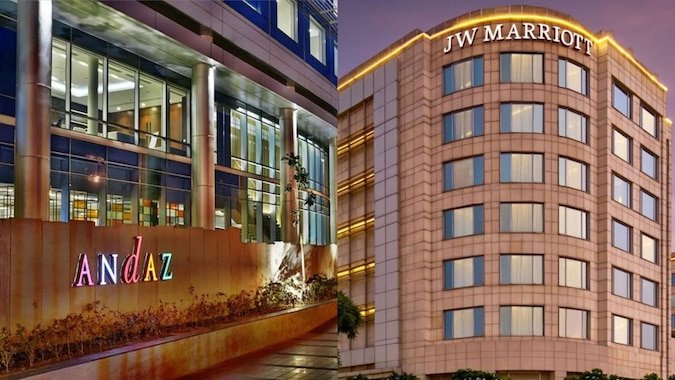
Official notices have been issued to JW Marriott New Delhi Aerocity and Andaz Delhi following multi-day inspections. Regulators documented several deficiencies and directed both properties to undertake corrective measures and submit compliance reports.
Andaz Delhi: Expired Food and Hygiene Concerns
During the inspection at Andaz Delhi, officials reportedly seized and destroyed around 87 kg of expired sweets from the confectionery section. Inspectors also found expired cake bases and bread packages.
Officials further detected apparent alterations involving date-marking stickers on expired bread packaging, raising concerns over food-safety compliance and traceability.
The inspection also identified several pest and sanitation concerns. Cockroach activity was reportedly observed near walk-in freezers, while houseflies and mosquitoes were found in grinding areas. A packet of gutka was also reportedly discovered inside the water-bottling plant.
Inspectors identified potential cross-contamination risks as well. Cutting boards used for raw vegetarian and non-vegetarian food were reportedly found soaking in the same water container.
Structural concerns were also flagged, including the placement of chillers between two restrooms, with exhaust ventilation reportedly directed toward a food-storage area.
JW Marriott: 59 Deficiencies Documented
At JW Marriott, regulators recorded 59 specific deficiencies during a two-day inspection covering its Indian, Italian, Chinese and bakery kitchens.
The inspection reportedly found cockroach and fruit-fly activity, unhygienic food-contact surfaces and spoiled food items, including apples showing fungal growth and rotten tomatoes in active food-preparation areas.
Concerns were also raised about drinking-water hygiene. Inspectors reportedly observed visible particulate matter in drinking water and flagged a rusting main water-storage tank.
Regulators also identified documentation and licensing issues involving ingredients such as paneer, khoya and chana masala, which allegedly lacked required endorsement or source-licensing documentation.
The hotel was further directed to stop certain unlicensed retail or re-labelling activities involving consumer-packaged products.
Food Samples Sent for Laboratory Testing
As part of the enforcement action, FSSAI officials collected food and beverage samples for laboratory examination. The samples reportedly included ghee, mayonnaise, honey, coconut milk powder, pulses and sauces.
Laboratory testing will help determine whether the sampled products meet prescribed food-safety and quality standards.
Corrective Action Ordered
Both hotels have been directed to take immediate corrective measures addressing hygiene, sanitation, pest control, structural vulnerabilities and licensing-related deficiencies.
The properties have also been instructed to submit detailed compliance reports to the authorities. Further administrative action may follow under applicable provisions of the Food Safety and Standards Act if the establishments fail to meet regulatory requirements.
Representatives of the affected hotels have stated that they are cooperating with the authorities and taking steps to address the observations.
The inspections have highlighted the importance of strict food-safety compliance even at high-end hospitality establishments, where large numbers of guests depend on robust hygiene, storage and food-handling standards.