
Kathmandu | October 2, 2026
More than a month after devastating flash floods swept through parts of Nepal, the landscape in several affected areas continues to bear the scars of one of the country’s worst recent disasters.
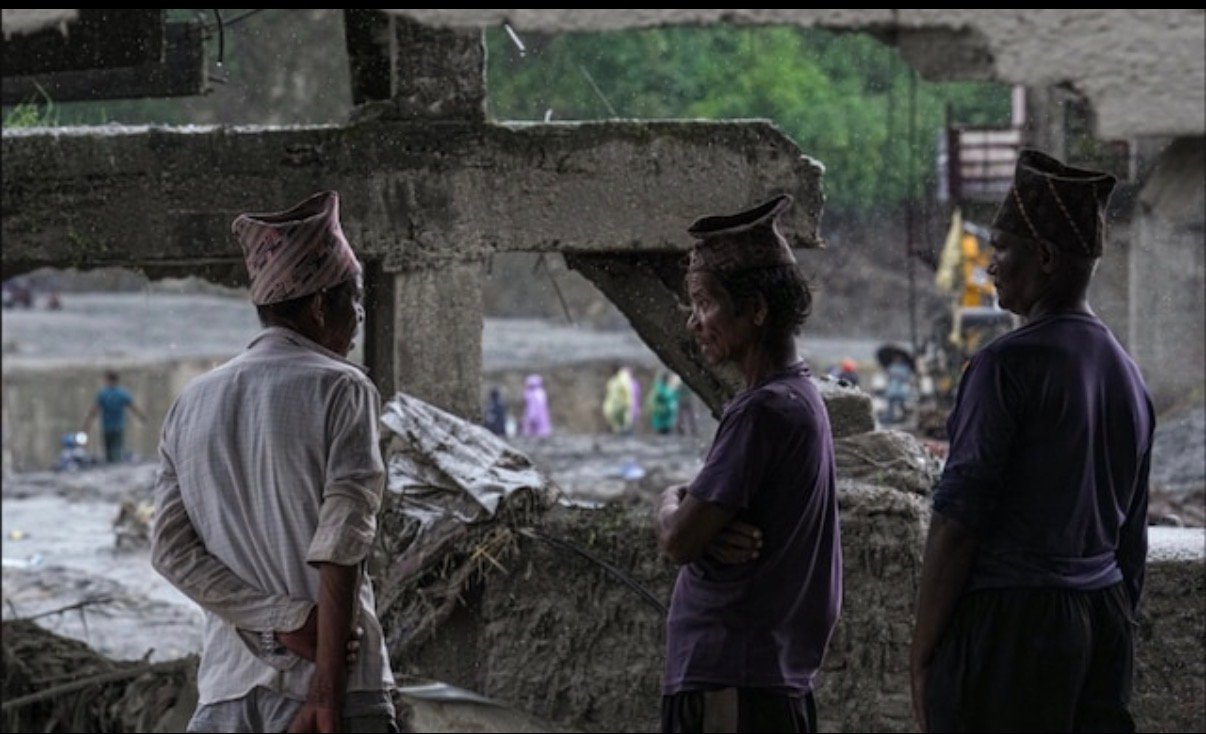
Where homes and roads once stood, there are now stretches of mud, rocks and massive piles of debris. Rescue and recovery teams continue to search through the remains of destroyed settlements, while survivors face the difficult task of rebuilding their lives.
The disaster began on August 26 after a massive collapse of ice and rock in the Himalayan region triggered torrents of water, mud and debris through the Bhote Koshi and Trishuli river systems. Communities in northern and central Nepal were severely affected.
A preliminary assessment by the United Nations Development Programme estimated that around 2.2 million tonnes of debris had accumulated across the affected areas. The debris includes parts of buildings, household belongings, vegetation, rocks and sediment. At least 2,359 buildings were identified as damaged in the initial assessment.
The scale of destruction has made recovery extremely difficult. Roads and bridges were washed away, homes were buried under mud and essential infrastructure was damaged. Many families have lost both their houses and sources of livelihood.
Even after the floodwaters receded, the humanitarian crisis continued. Thousands of people remained missing, while rescue teams searched dangerous tunnels, collapsed structures and vast deposits of mud and debris.
For survivors, the disaster is no longer only about rescue. It is about finding shelter, restoring livelihoods and deciding whether damaged communities can safely be rebuilt.
The devastation has left behind more than physical destruction. For thousands of families, the mud and debris are now reminders of homes, belongings and loved ones that disappeared in minutes.