
By Swati
New York, September 11, 2026
Twenty-five years ago, within less than two hours, four hijacked passenger aircraft turned an ordinary September morning into one of the darkest days in modern history.
On September 11, 2001, al-Qaeda terrorists hijacked four commercial planes and deliberately used them as weapons against targets in the United States. Two struck New York’s World Trade Center, one hit the Pentagon near Washington, D.C., and the fourth crashed in Pennsylvania after passengers fought back against the hijackers.
Nearly 3,000 people were killed in the attacks. A quarter of a century later, their names remain at the heart of the world’s remembrance.
The Morning the World Watched in Shock
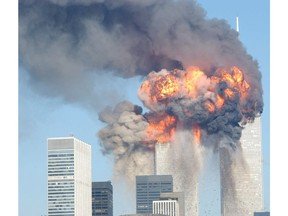
At 8:46 a.m., American Airlines Flight 11 crashed into the North Tower of the World Trade Center.
Seventeen minutes later, at 9:03 a.m., United Airlines Flight 175 struck the South Tower.
What initially appeared to be a catastrophic aviation accident quickly became unmistakably clear: America was under a coordinated terrorist attack.
At the Pentagon, emergency responders confronted another devastating scene when American Airlines Flight 77 crashed into the building at 9:37 a.m.
The fourth hijacked aircraft, United Airlines Flight 93, became the scene of an extraordinary act of resistance.
After passengers learned through telephone calls that other planes had been deliberately crashed, they attempted to overpower the hijackers. At 10:03 a.m., Flight 93 crashed into a field near Shanksville, Pennsylvania.
The aircraft did not reach its intended target.
The official 9/11 Memorial timeline records the major moments of the attacks, including the two World Trade Center impacts, the Pentagon strike, the collapse of both towers and the crash of Flight 93.
The Twin Towers Fall
The South Tower collapsed at 9:59 a.m.
Twenty-nine minutes later, at 10:28 a.m., the North Tower collapsed.
The destruction of the World Trade Center transformed Lower Manhattan into a vast emergency zone. Thousands of people fled through streets filled with smoke and debris while firefighters, police officers, paramedics and other emergency workers moved toward the danger.
The 9/11 Memorial & Museum says the World Trade Center complex had between 16,400 and 18,000 people inside when the attacks began, with the vast majority ultimately evacuating safely.
Nearly 3,000 Lives Lost
The attacks killed 2,977 people, excluding the 19 hijackers.
The victims included office workers, visitors, airline passengers and crew members, firefighters, police officers, paramedics and other emergency personnel.
The 9/11 Memorial’s 25th-anniversary commemoration is centred on the reading of the names of 2,983 people killed in the September 11, 2001 attacks and the February 26, 1993 World Trade Center bombing.
Behind every name was a family, a career, a friendship and a future that was abruptly taken away.
Who Was Behind 9/11?
The attacks were carried out by al-Qaeda, the terrorist organisation led by Osama bin Laden.
The 9/11 Commission identified Khalid Sheikh Mohammed as the principal architect of the attacks. The Commission’s investigation documented how the so-called “planes operation” developed within al-Qaeda under the leadership of bin Laden and senior figures in the organisation.
The plot developed over several years and exploited weaknesses in intelligence coordination, aviation security and the government’s ability to connect separate pieces of information.
The attacks exposed major failures in preparedness and information sharing—failures that became central to the U.S. government’s post-9/11 reforms. The independent 9/11 Commission was established to investigate the circumstances surrounding the attacks and recommend measures to prevent another such catastrophe.
America After September 11
9/11 changed the United States almost overnight.
The country launched a military campaign in Afghanistan against al-Qaeda and the Taliban government that had provided sanctuary to the organisation.
Airport security was dramatically strengthened. Intelligence agencies received expanded responsibilities, while counterterrorism cooperation became a central priority for governments around the world.
The attacks also triggered intense debates over surveillance, privacy, civil liberties, military intervention and the balance between security and individual freedom.
The consequences were not limited to the United States. The post-9/11 era reshaped international diplomacy, security policy and the global fight against terrorism.
The Long Shadow of Ground Zero
The tragedy did not end when the fires were extinguished.
Thousands of first responders, rescue workers, volunteers and survivors were exposed to hazardous conditions during the rescue, recovery and clean-up operations.
Many later suffered serious health consequences.
The 9/11 Memorial continues to honour not only those killed in the attacks but also those who risked their lives to save others and the survivors who carried the consequences into the years that followed.
Twenty-Five Years Later, Memory Remains
The 25th anniversary is also a generational milestone.
The 9/11 Memorial & Museum says a significant portion of Americans are now too young to remember September 11, 2001 personally. Its 2026 anniversary programme therefore places particular emphasis on teaching a new generation about the attacks, the loss, the bravery and the response that followed.
In New York, families of victims gathered for the annual commemoration on September 11, 2026, with the reading of victims’ names at the Memorial plaza. The ceremony also includes moments of silence marking the key moments of the attacks.
The iconic Tribute in Light once again became part of the anniversary remembrance, illuminating the New York skyline as a symbol of memory and resilience.
A Day That Still Defines the 21st Century
September 11, 2001, was not simply an attack on buildings.
It was an attack that changed how the world understood terrorism, security and vulnerability.
It altered American foreign policy, transformed aviation security, reshaped intelligence cooperation and influenced wars and political decisions for decades.
Yet 25 years later, the most enduring legacy of 9/11 remains deeply human.
It is found in the names read aloud each year.
It is found in families who continue to remember loved ones.
It is found in the first responders who ran toward the burning towers while others were running away.
And it is found in a simple promise repeated across generations:
We remember. We honour. We will never forget.
September 11, 2001 — 25 years later, the world remembers.